


Google-backed scientists are seeking approval to release millions of specially treated mosquitoes in an effort to reduce dangerous disease-carrying mosquito populations.
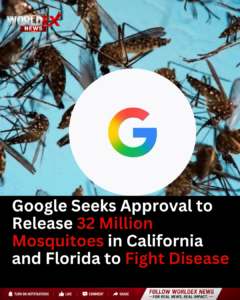
Google’s life-sciences initiative, known as Debug under Alphabet, is seeking U.S. regulatory approval to release up to 32 million specially treated male mosquitoes across parts of California and Florida over a two-year period.
The project aims to combat mosquito-borne diseases such as:
- West Nile virus
- Dengue fever
- Zika virus
- Chikungunya
- Yellow fever
Scientists are using a naturally occurring bacterium called Wolbachia. When infected male mosquitoes mate with wild females, the eggs fail to hatch, gradually reducing disease-spreading mosquito populations.
According to reports, only male mosquitoes would be released, and male mosquitoes do not bite humans. The proposal is currently under review by the U.S. Environmental Protection Agency (EPA), which is accepting public comments before making a final decision.
Google’s Debug project has previously conducted mosquito-control trials in California, where researchers reported significant reductions in targeted mosquito populations.
The proposal has generated mixed reactions online, with supporters calling it a major public-health innovation while critics raise concerns about potential environmental impacts and large-scale biological experiments.
Disclaimer:
The mosquitoes are not being released yet. The project is still awaiting regulatory approval, and officials have not announced final release locations. Scientists state that only non-biting male mosquitoes would be used in the program.





Leave a Reply